
Is it Worth it? Why Strategy Workshops Fail
By: Katie Mowery
Published on June 11, 2026.
In Brief
Strategy workshops can be powerful tools for building alignment, surfacing new opportunities, and accelerating decision-making — but only when they are designed with intention. The most effective workshops go beyond sticky notes and brainstorming exercises to create focused, honest conversations that lead to clear next steps. With the right structure, preparation, and facilitation, a workshop can turn ambiguity into momentum and help teams move from discussion to action.
We love a good workshop. Unfortunately, strategy workshops have developed a mixed reputation.
For some teams, they are energizing, clarifying: They bring the right people into the room, create momentum around difficult decisions, and help organizations move faster than they could through weeks of scattered meetings.
For others, workshops feel performative. The room is full of sticky notes, the conversation feels productive, and everyone leaves with a sense of possibility, but a few weeks later, nothing has changed. No decision has been made. No direction has been clarified. No one is quite sure what to do next.
That gap is the reason many leaders have started to question the value of workshops altogether.
A strong brand or product strategy workshop is a structured environment for alignment, decision-making, and forward motion. When done well, it compresses weeks or months of ambiguity into a focused, collaborative process, with tangible, actionable next steps that align teams through the development process.
Workshops Still Have Immense Value — When They Are Designed to Drive Action
The strongest workshops do not simply generate ideas. They create alignment.
They help teams see the same problem more clearly. They surface assumptions. They reveal where stakeholders agree, where they differ, and what decisions need to be made. They turn scattered perspectives into a shared path forward.
That kind of progress is difficult to achieve through disconnected meetings and email threads. It requires focus. It requires structure. It requires trust. And it requires a partner who knows how to guide a team from conversation to decision.
Let’s discuss some common pitfalls of workshops and how you can avoid them.

“Workshop” Is More Than a Brainstorm
The phrase “let’s workshop this” has become shorthand for “let’s get people in a room and figure it out.”
That casual use of the word has diluted what a workshop is supposed to be.
A true workshop is not an open-ended brainstorm. It is not a loosely facilitated discussion. It is not a collection of exercises chosen because they are fun or familiar. A successful workshop is intentionally designed. Activities, discussion, synthesis, and decision-making must build on one another. The flow matters. The sequencing matters. The desired outcome matters.
The best workshops move from foundational alignment to focused exploration to actionable decisions. They give teams room to think, but not so much room that the conversation drifts. They create energy, but they also create accountability.
In other words, a workshop is not valuable because people participated. It is valuable because the right participation led to meaningful progress.
Curious if a workshop is right for your project?
Check out our Brand Research experience and see how we’ve helped other clients facing similar issues.
Why So Many Workshops Fall Short
Workshops often fail for four connected reasons: lack of context, lack of engagement, lack of trust, and lack of action.
Lack of Context
Too many workshops are planned around generic activities rather than a deep understanding of the client’s actual challenges. A facilitator may bring a polished framework, but if they do not understand the business, the product, the audience, the internal pressures, or the decisions at stake, the workshop will only skim the surface.
The result is a session that feels good in the moment but does not hold up afterward. The team may leave with notes, themes, or early ideas, but not with the clarity needed to make real progress.
Lack of Engagement
One of the greatest values of a workshop is that it gets key decision-makers into the same space to focus on the same problem at the same time. That value disappears when participants are distracted, multitasking, or only partially present.
Workshops require attention. They require people to step away from day-to-day noise long enough to think critically, debate constructively, and make decisions together. Without that focus, the session becomes another meeting — longer, perhaps, but not necessarily more useful.
Lack of Trust
Strategy work often surfaces competing opinions, uncomfortable tradeoffs, and unresolved tension. That is not a flaw in the process. That is the work.
But if participants do not feel safe sharing honest perspectives, the workshop will never reach true alignment. People will withhold concerns. Difficult questions will remain unasked. Decisions will reflect the loudest voices rather than the strongest thinking.
Lack of Action
A workshop should not end with a vague sense that “we had a great conversation.” It should end with defined outcomes, clear next steps, and a shared understanding of what happens after the room clears.
Without a path to implementation, even the most engaging workshop becomes temporary inspiration.
What Makes a Strategy Workshop Effective?

An effective workshop starts before anyone enters the room.
1. Understand the Need
What decision needs to be made? What alignment is missing? What questions need to be answered? What constraints are shaping the work? What internal dynamics could affect the outcome?
For brand and product strategy workshops especially, context is critical. The partner leading the session needs to understand the product, the market, the customer, the business model, and the organizational realities that will determine whether recommendations can actually be implemented.
2. Define Outcomes
A workshop should not be built around activities first. It should be built around the result the team needs to achieve.
That might include clarifying a product vision, aligning on brand positioning, prioritizing customer needs, identifying innovation opportunities, defining a roadmap, or making decisions around a new market strategy. Whatever the goal, every part of the workshop should ladder up to that outcome. A strong partner should work with your internal stakeholders to identify the appropriate outcomes to prioritize based on length and limitations of the workshop. Not every outcome can, or should, be solved in the workshop format. A partner that knows the ins and outs of workshops will be able to guide you on how to prioritize outcomes and activities.
3. Expect Full Participation
The internal team also has a role to play. A workshop is not something that happens to a team. It is something the team commits to.
That means showing up prepared, staying present, participating honestly, and being willing to make decisions. One or two focused days can save weeks of circular discussion — but only if the right people are fully engaged. A solid workshop often includes some homework or pre-work for participants so they are able to begin the workshop with the right context and headspace for collaboration. Understanding your team and the level of commitment before, during, and after a workshop is critical to setting appropriate expectations for involvement.
4. Prepare the Environment
The environment needs to support open conversation. Teams cannot align around reality if people are afraid to name what they see, question assumptions, or challenge a direction that may not be right. Beginning the workshop with activities to help participants have the right headspace is crucial to encourage openness and reduce defensiveness as new ideas are brought to the table.
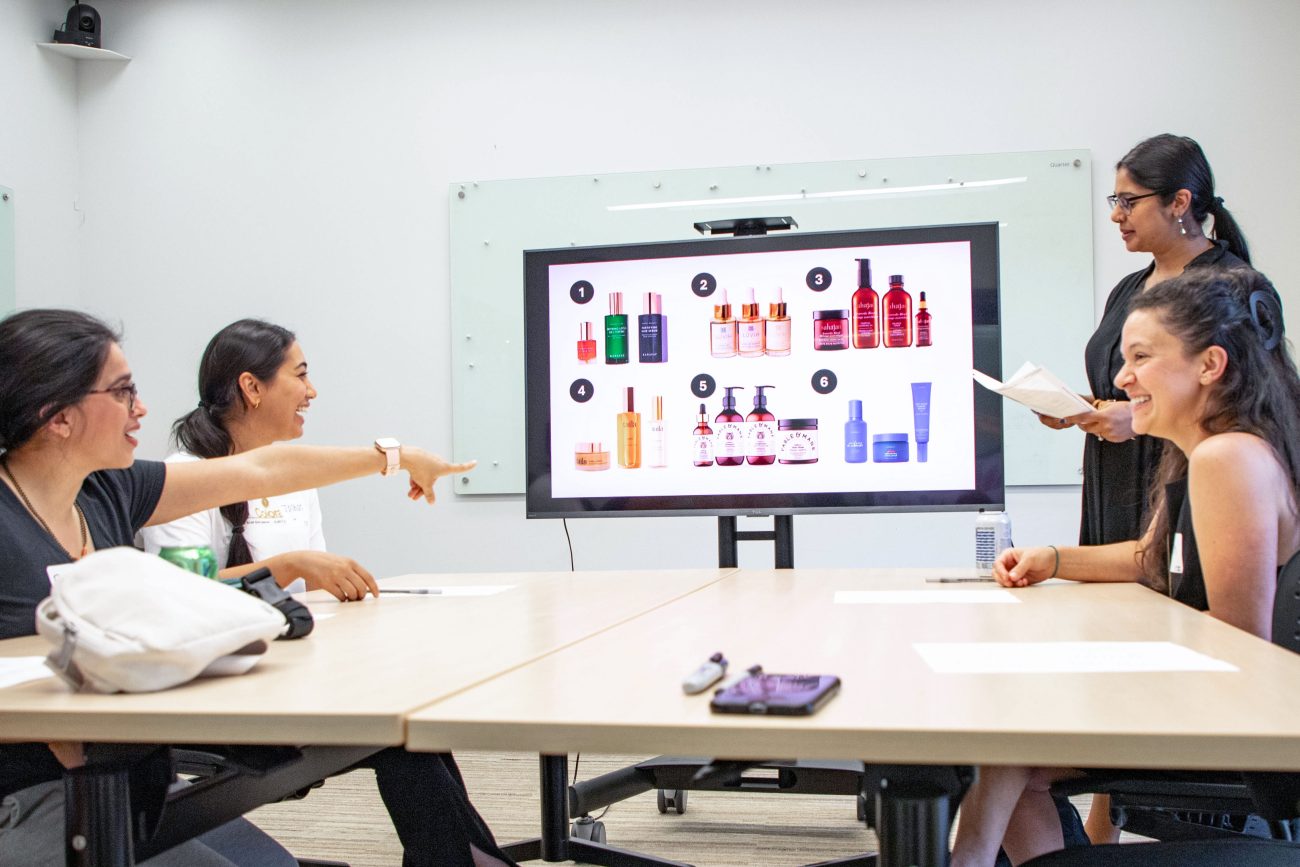
In addition to activities, the environment itself: tables, chairs, whiteboards, writing tools, and even practical needs like drinks and snacks can set the stage for the type of collaboration expected in the workshop—personal reflection, small group discussion, large forums, etc.
The Role of the Right Partner
A strong workshop partner does more than facilitate activities. They help the team frame the right questions, navigate ambiguity, manage group dynamics, and translate discussion into action.
That requires both strategic rigor and empathy.
The right partner will take the time to ramp up. They will seek to understand the business challenge before recommending the process. They will design the workshop around outcomes, not templates. They will create space for productive disagreement. And they will help the team leave with clarity about what happens next.
This is especially important in product development and design strategy, where the decisions made in a workshop may influence research direction, product architecture, customer experience, brand positioning, or investment priorities.
A poorly designed workshop can create confusion, churn, and unnecessary spend. A well-designed one can accelerate the work, lead to alignment, and empower decision-making.
So, are strategy workshops still worth it?
Yes — when they are designed with intention.
A workshop is worth the investment when the partner understands the challenge, the outcomes are clear, the right people are present, the team is fully engaged, and the environment allows for honest discussion.
Without those conditions, a workshop may be memorable but not meaningful.
With them, it can be one of the fastest ways to create clarity, build alignment, and move from possibility to progress.