Customer Experience (CX) Strategy

Brands Win on Experience

CX (customer experience) is the customer’s perspective across every interaction with your company. As customers’ expectations continue to rise, what once was “nice to have” is becoming make or break. According to a study by Qualtrics, 89% of companies that lead with customer experience perform financially better than their competitors. A good customer experience aligns the interaction a user has with the product itself to other aspects of the experience, ensuring that it is delivering on brand promises.

Developing stand-out customer experiences require intentionality and a holistic view. It’s important to step back and look at the big picture; crossing departments, teams, and channels to see the full experience through the eyes of the customer. The team at Priority Designs can help audit, ideate and develop strategies that will leave customers with experiences that meet, and even exceed expectations.
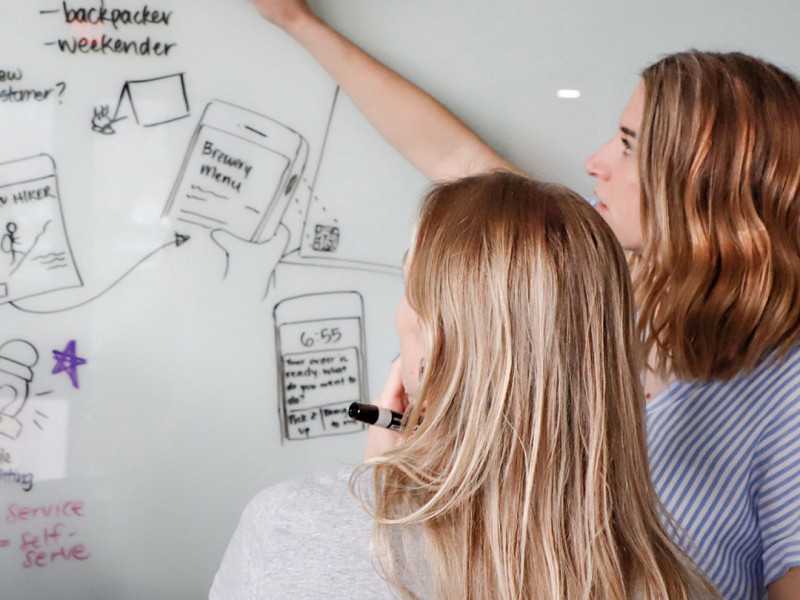
Customer Experience Brainstorm

80% of customers say that the experience provided by a company is as important as the products and services.

Source
Salesforce, “What is Customer Engagement? Key Findings from Global Research to Help Your Business Grow”

80% of customers say that the experience provided by a company is as important as the products and services.

Source
Salesforce, “What is Customer Engagement? Key Findings from Global Research to Help Your Business Grow”

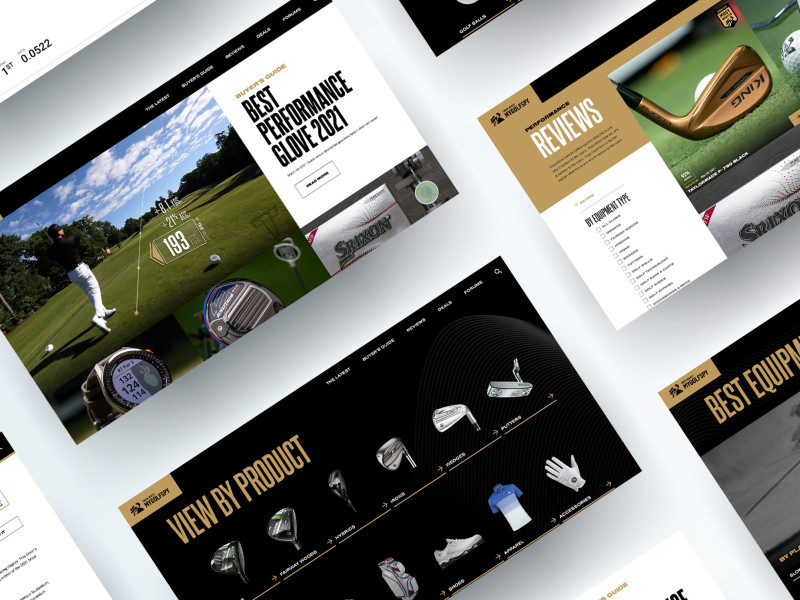
Case Study: Aligning UX to Golf Mindset

My Golf Spy partnered with Priority Designs to re-think and re-design their website experience. In order to better understand motivations and buying behaviors, we started with research to inform the site’s navigation and flow of information. By identifying three distinct user groups, we organized and designed the site to assist each persona with their unique needs along the journey. The new site helps facilitate finding information faster, providing personalized recommendations, and building confidence in purchase decisions.
Our CX Strategy

Up-Leveling the Experience

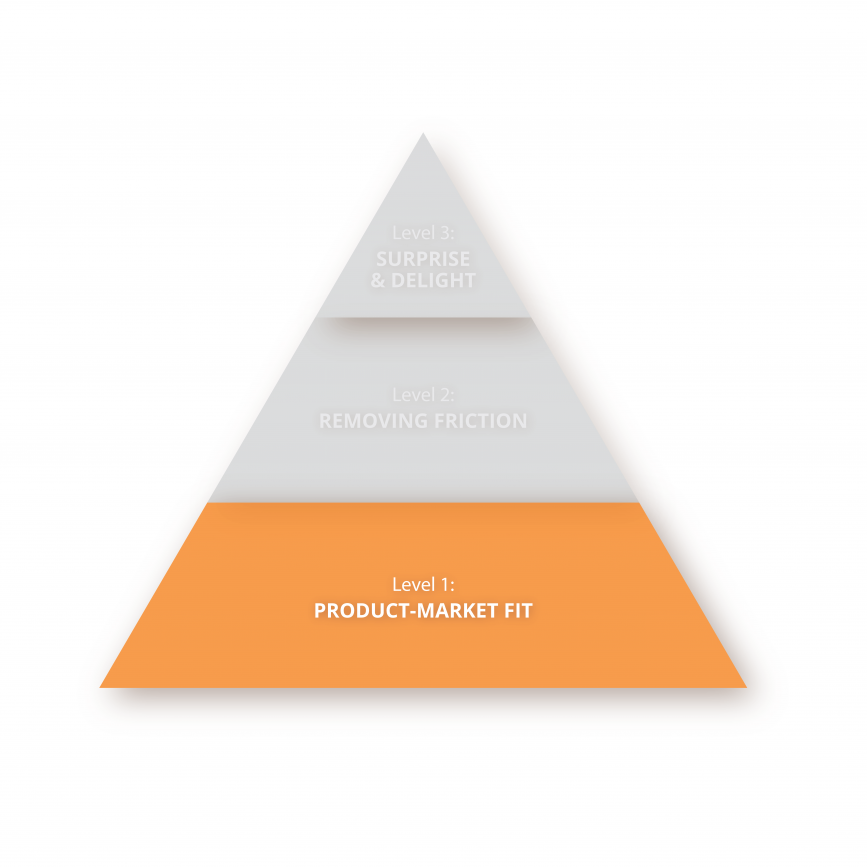
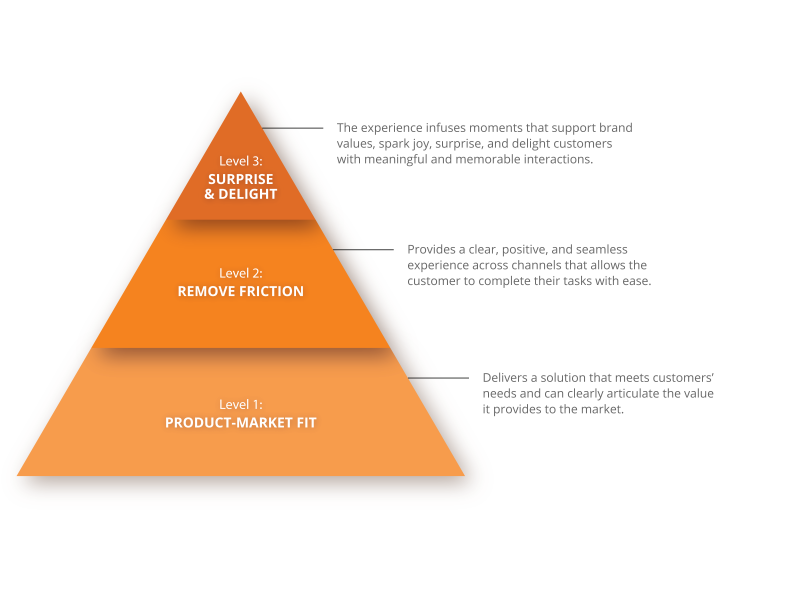
It’s important to start with the essentials, and continue to “level up” the experience over time. At Priority Designs, we think of CX as three levels that build on each other:

  • level 1, the foundation, is all about providing value to the target audience with what’s called a product-market fit
  • level 2 is about finding and removing friction to make the experience easy and seamless
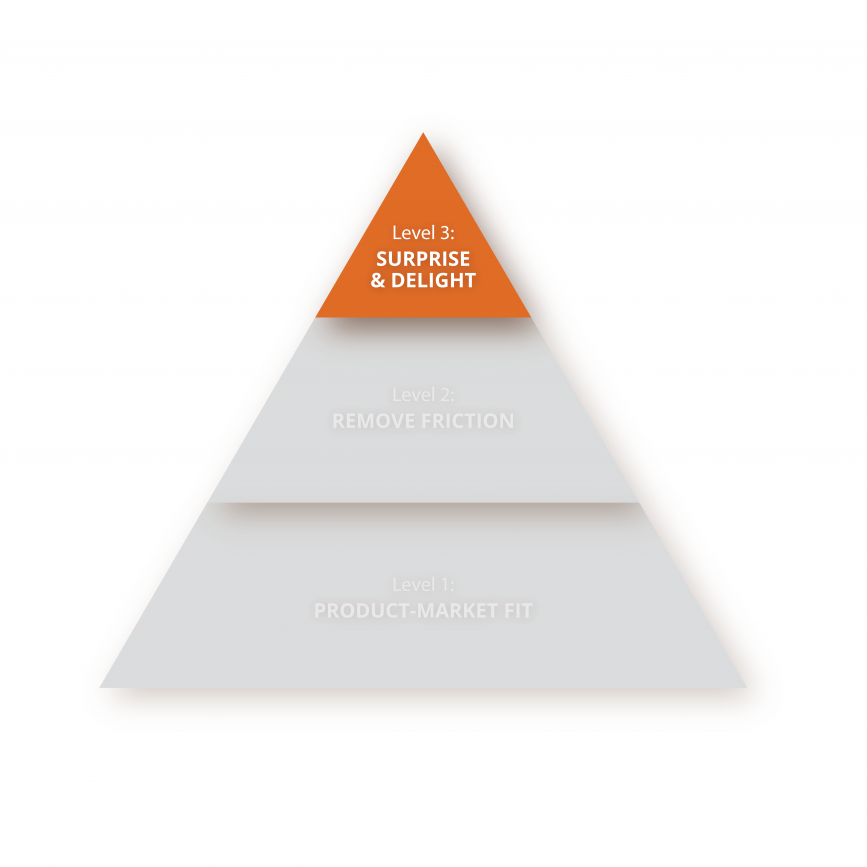
  • level 3 involves infusing experiences with brand moments that wow, surprise, and delight
Product-Market Fit

A product-market fit is defined as having a product that meets a need and delivers value to an audience. We help clients conduct a product-market fit evaluation by working together to create a hypothesis about who the target audience is and what value the product provides. Then, we conduct research to uncover insights that help inform any necessary adjustments.

Achieving a product-market fit may include testing products with new groups of consumers, or making tweaks to the product offering to better meet the needs of the market. Ultimately, this process will provide clarity, shared vision, and deeper understanding of the customers you’re designing experiences for.

Removing Friction

When customers have a negative experience, brands have a lot to lose. 59% of customers say that they’ll walk away from a company after several bad experiences, according to a study by pwc. In order to build great customer experiences, removing friction and continuous optimization are essential. By identifying areas to improve, we can design better experiences that address the issues customers are having.

After an experience audit, our team addresses each improvement area through a process of: discover, ideate, build, test, and refine. In some cases, solutions may be improving the usability or UX of an interface, or updating copywriting to set clear expectations. Sometimes the solution is an entirely new way of solving the issue with a better process. The goal of these activities is to make the overall experience easier and more seamless for each customer.

Surprise & Delight

When an experience is functioning well, it can be tempting to stop there, but this can be a huge missed opportunity for brands. By infusing brand personality throughout an experience, companies can create surprise and delight, giving customers something special to remember. These moments provide an unexpected spark of joy that is not soon forgotten.

When developing stand-out experiences, a good place to start is reviewing brand values and defining how you want customers to feel. The team at Priority Designs can help ideate creative ways that illuminate the brand’s values and create emotive experiences for customers. It’s important that these moments don’t deter from the task, but create additional value along the way.

Our CX Strategy

Upleveling the Experience

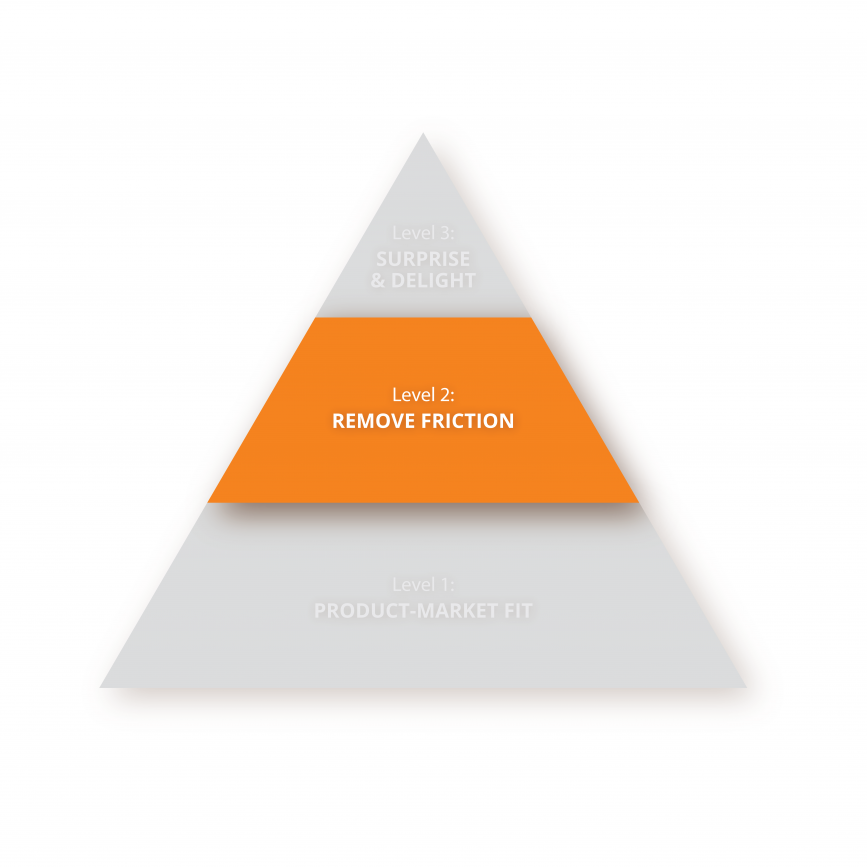
It’s important to start with the essentials, and continue to “level up” the experience over time. At Priority Designs, we think of CX as three levels that build on each other:

  • level 1, the foundation, is all about providing value to the target audience with what’s called a product-market fit
  • level 2 is about finding and removing friction to make the experience easy and seamless
  • level 3 involves infusing experiences with brand moments that wow, surprise, and delight

Product-Market Fit

A product-market fit is defined as having a product that meets a need and delivers value to an audience. We help clients conduct a product-market fit evaluation by working together to create a hypothesis about who the target audience is and what value the product provides. Then, we conduct research to uncover insights that help inform any necessary adjustments.

Achieving a product-market fit may include testing products with new groups of consumers, or making tweaks to the product offering to better meet the needs of the market. Ultimately, this process will provide clarity, shared vision, and deeper understanding of the customers you’re designing experiences for.

Removing Friction

When customers have a negative experience, brands have a lot to lose. 59% of customers say that they’ll walk away from a company after several bad experiences, according to a study by pwc. In order to build great customer experiences, removing friction and continuous optimization are essential. By identifying areas to improve, we can design better experiences that address the issues customers are having.

After an experience audit, our team addresses each improvement area through a process of: discover, ideate, build, test, and refine. In some cases, solutions may be improving the usability or UX of an interface, or updating copywriting to set clear expectations. Sometimes the solution is an entirely new way of solving the issue with a better process. The goal of these activities is to make the overall experience easier and more seamless for each customer.
Surprise & Delight

When an experience is functioning well, it can be tempting to stop there, but this can be a huge missed opportunity for brands. By infusing brand personality throughout an experience, companies can create surprise and delight, giving customers something special to remember. These moments provide an unexpected spark of joy that is not soon forgotten.

When developing stand-out experiences, a good place to start is reviewing brand values and defining how you want customers to feel. The team at Priority Designs can help ideate creative ways that illuminate the brand’s values and create emotive experiences for customers. It’s important that these moments don’t deter from the task, but create additional value along the way.
Working with Priority Designs is the single best experience I have had on any project in my 20+ year career. Having BIG ideas is one thing, having someone be able to execute them for you is another. I would recommend anyone to reach out to Priority Designs. You will not be disappointed.

Owner
MyGolfSpy

Working with Priority Designs is the single best experience I have had on any project in my 20+ year career. Having BIG ideas is one thing, having someone be able to execute them for you is another. I would recommend anyone to reach out to Priority Designs. You will not be disappointed.

Owner
MyGolfSpy

Case Study: Developing Clarity for Consumers

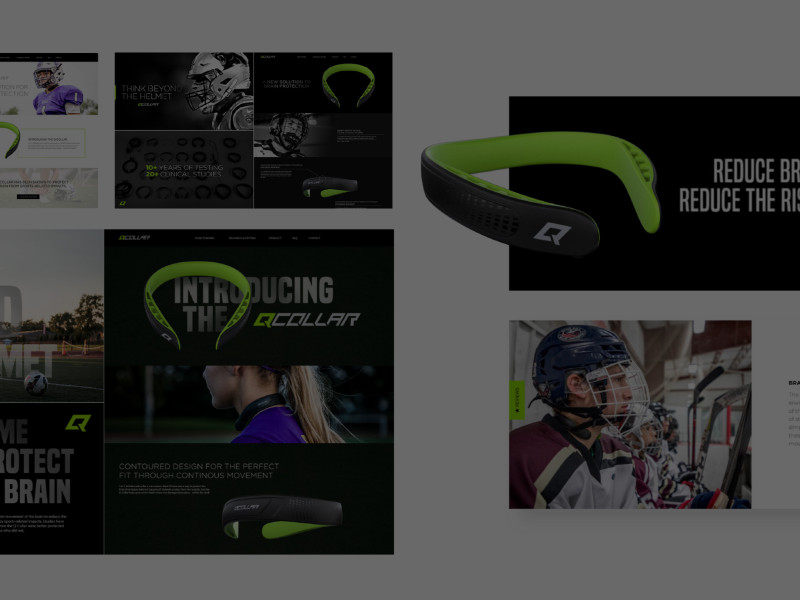
Q30 Innovations developed an innovative new technology throughout years of development. With a novel product and unfamiliar approach, Q30 needed to  have a clear, easily digestible explanation for the product launch. It also had to remain scientifically and medically accurate. No small feat. Priority Designs helped simplify complex concepts into simple ideas and segment messaging by key consumer needs. The communication strategy was built to remove a troublesome friction point while tying consumer experience to the product.

Our CX Methods

Our Tools

Experience Audit

Specialists from our team will review the current experience by using your product or service first hand, and/or through the eyes of a consumer. We’ll also review prior work to understand and compare the current experience to the intended experience. This audit allows us to understand our starting point.

Hypothesis Generation

Using information revealed in the experience audit and competitive analysis, we create hypotheses to test with users. These hypotheses are informed experience strategy options that are refined over time with stakeholder and user feedback.

Solution Ideation

We take into consideration all the feedback and information learned from the beginning to create solutions that address the identified pain points and spark delight with your consumers. These concept solutions visualize the hypotheses and are taken into testing, refinement and development.

Competitive Analysis

We conduct a competitive analysis to understand how others offer products and services, communicate value, and what experiences have been developed for customers. We identify overlap, gaps, and provide recommendations on how to address needs while establishing a unique position in the market.

Consumer Research

Our hypotheses are evaluated by consumers to ensure our solutions meet the needs and expectations of your target audience. Through a variety of data collection methods, we draw insights from the user to drive our process and decisions.

Communication Strategy

Sometimes what is most critical to a product’s success is not about the product itself, but how a brand communicates it’s features and benefits clearly to their audience. We support brands by developing a communication strategy that helps them articulate meaningful language that resonates with consumers.

Secondary Research

When possible, we incorporate existing data from reputable sources to learn about large-scale trends from quantitative studies, helping set a foundation and perspective of the market. This additional outside context provides a valuable input to combine with qualitative research.

Journey Maps & Personas

With research as a foundation, we look at what emotions, motivations, expectations, decisions, and frustrations users face to create a journey map of their current experience. Patterns, as well as differences in users, are used to define personas. This allows us to see the big picture and cater solutions to the target audience.

Brand Activation

We help clients take their brand strategy and bring it to life, infusing visuals, tone, emotions and copy into the experience strategy. This helps make the experience memorable to the consumer, and uniquely yours.

Our Tools

Experience Audit

Competitive Analysis

Secondary Research

Hypothesis Generation

Consumer Research

Journey Maps & Personas

Brand Activation

Communication Strategy

Solution Ideation

Case Study: Developing Clarity for Consumers

Q30 Innovations developed an innovative new technology throughout years of development. With a novel product and unfamiliar approach, Q30 needed to  have a clear, easily digestible explanation for the product launch. It also had to remain scientifically and medically accurate. No small feat. Priority Designs helped simplify complex concepts into simple ideas and segment messaging by key consumer needs. The communication strategy was built to remove a troublesome friction point while tying consumer experience to the product.
Other Industries

Brand Strategy

Learn More

Service Design Consulting

Learn More